We often celebrate Albert Kahn as the creative visionary behind Detroit’s most iconic landmarks, but his genius extended far beyond aesthetics. By rethinking the physical envelope of the factory, he fundamentally altered how production space was utilized, laying the foundational groundwork for what we know today as lean manufacturing and efficient industrial workflow. Some say his turn-of-the-century designs were the first to address the critical role of ergonomics in manufacturing efficiency and the well-being of workers.
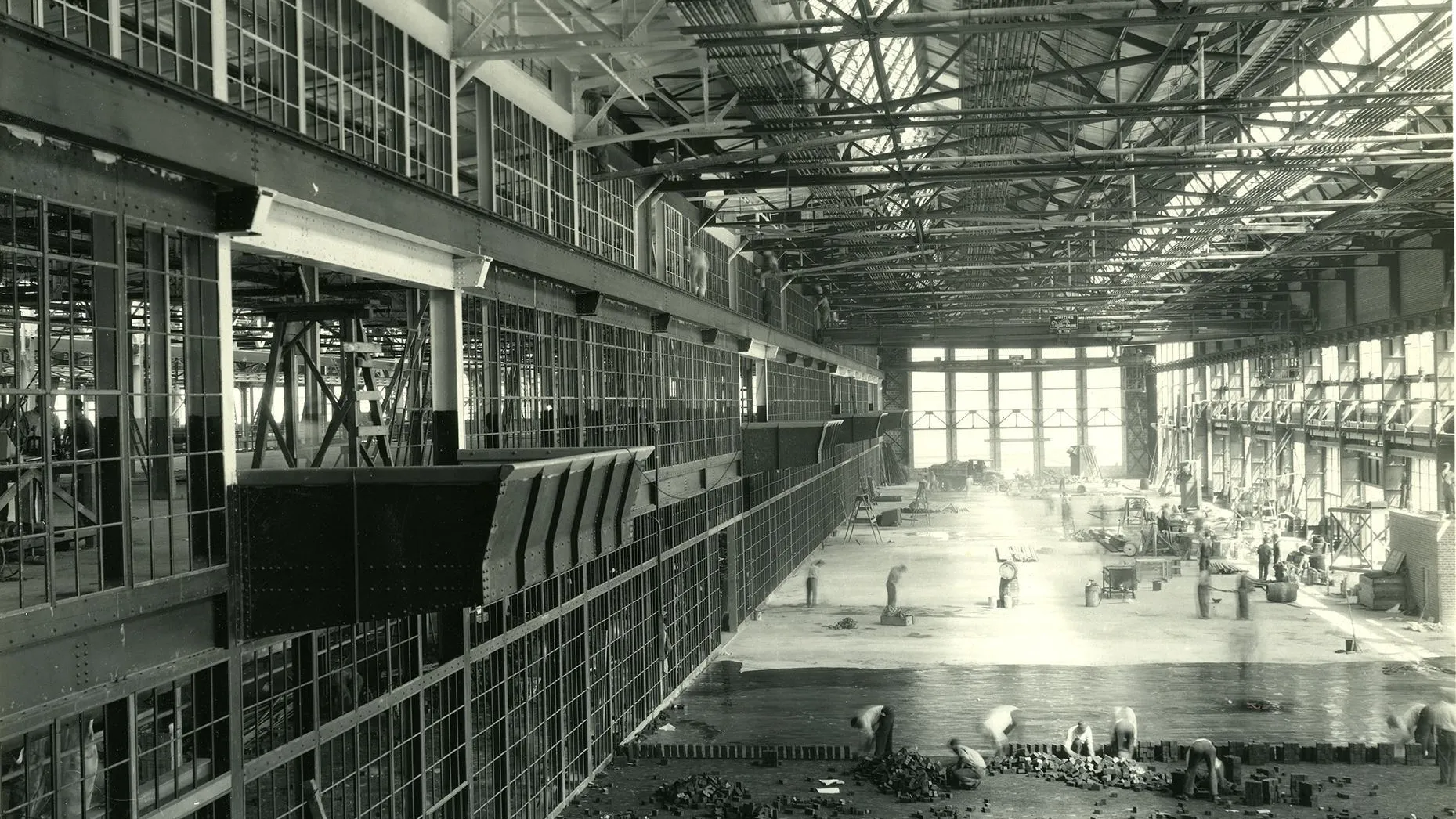
In an article originally published at the AllAboutLean.com blog, noted lean manufacturing researcher, consultant and author Christoph Roser isolates the exact architectural breakthroughs that triggered this industrial evolution. Roser takes us on a fascinating historical journey, detailing how Kahn broke free from the constraints of heavy brick, wooden beams and suffocating multi-floor layouts. Through the innovative use of reinforced concrete and steel-span structures, Kahn introduced unprecedented dimensions of natural light and wide-open floor space.
From the revolutionary Crystal Palace at Ford’s Highland Park to the expansive, single-floor layout of the River Rouge Complex, Roser illustrates how Kahn’s structural innovations directly empowered manufacturers. By eliminating restrictive pillars, maximizing visual management and optimizing material transport, Kahn went beyond the mere building of factories and began to unlock the true potential of the mass manufacturing universe.
Read on to discover how the structural blueprints of the past continue to dictate the efficiency, flexibility and layout of the modern shop floors we walk today.