
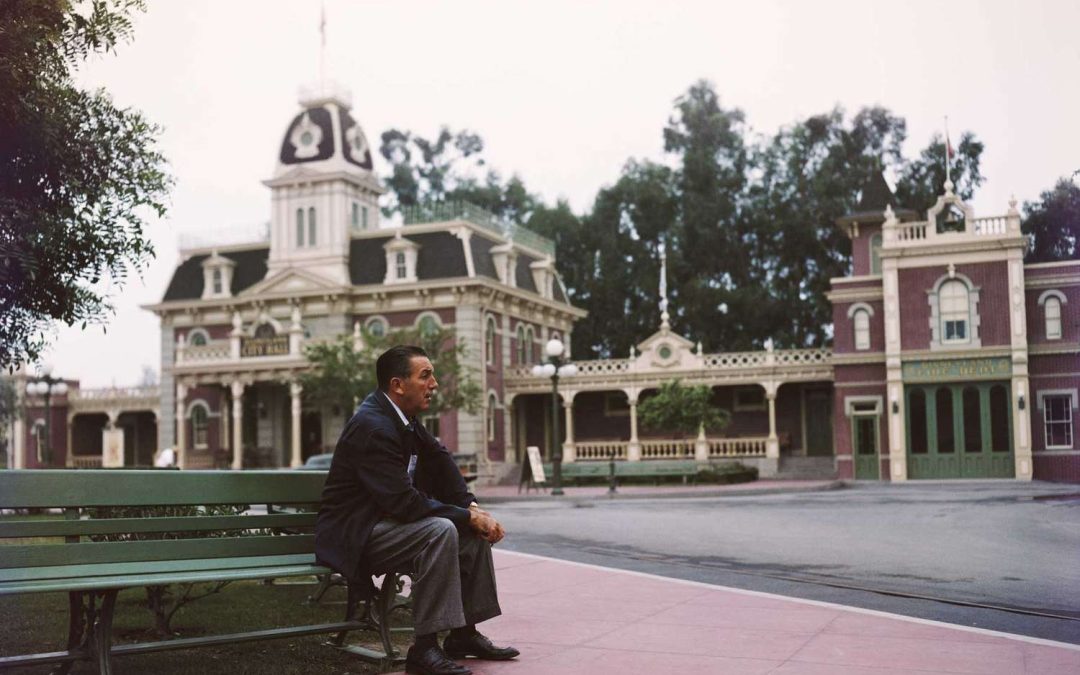
Walt Disney didn’t just stumble into the idea of Disneyland by dreaming about fairy tales and frontier towns. It seems that much of the spark came from a place far more unexpected: Albert Kahn’s industrial masterpiece at Ford’s River Rouge plant.
This is according to a newly published book by Roland Betancourt titled “Disneyland and the Rise of Automation: How Technology Created the Happiest Place on Earth.”
In his book, Betancourt asks us to picture Disney on a road trip in 1948, fresh from a stimulating visit to the Chicago Railroad Fair, buzzing with nostalgia, steam whistles and the romance of American railroading. He and fellow traveler Ward Kimball (a Disney animator) roll into Dearborn expecting more of the same.
Instead, they walk straight into Kahn’s colossal cathedral of modern industry, a 1,200‑acre symphony of steel, smoke, molten ore and mile‑long assembly lines that moved with the grace of choreography. Kimball’s diary captured it perfectly as he wrote: “Good God! What a sight!”
This wasn’t just a factory. It was a world’s fair in permanent form. It was a massive set piece where Disney and Kimball watched as visitors boarded glass‑roofed buses, toured elevated catwalks and witnessed raw materials being transformed into gleaming automobiles in just 28 hours.
It was immersive. It was theatrical. It was automated. And it was designed by Albert Kahn.
For Disney, who adored trains, loved spectacle and was the embodiment of America’s post‑WWII/techno‑optimism, the Rouge wasn’t simply impressive. It was a revelation. Here Disney saw a blueprint for how to move people, tell stories and create wonder through automation, scale and seamless design.
Disney would supply the imagination. Southern California would supply the sunshine.
But the mammoth infrastructure and scale for Disney’s magical vision? Much of it came straight from the Rouge.
Read Roland Betancourt’s full report on the evolution of Disneyland as published in the Smithsonian magazine here: